
WELCOME BONUS 300%
UP TO €2000 + 100
FREE SPINS
UP TO €2000 + 100
FREE SPINS
Home → Roulette
Roulette at Luckywave Casino
Dozen 2:1 and Columns Overview
The Dozen 2:1 payout applies to the first, second, or third group of twelve numbers on the roulette layout. This specific wager offers a lower return compared to the Straight 35:1 bet, which covers only a single number. The Column 2:1 option provides an identical payout ratio for vertical groups of numbers. Both bets cover one-third of the available sectors on the wheel.
Roulette Europäisch features thirty-seven sectors where these external bets function with a consistent house edge of 2.70 percent. In contrast, the American variant includes an extra double-zero sector, increasing the house advantage to 5.26 percent. The payout structure remains at 2:1 regardless of the wheel type, but the probability of winning decreases significantly. Players must account for this reduced statistical likelihood when placing these wagers.
Lightning Roulette by Evolution introduces multipliers that can boost payouts up to 500 times the original stake. These special modifiers apply to specific numbers, potentially affecting the expected value of standard Dozen 2:1 bets. Quantum Roulette Live by Playtech also utilizes quantum multipliers reaching 500x on selected numbers. Such features add volatility to the traditional column betting strategy without altering the base payout ratios.
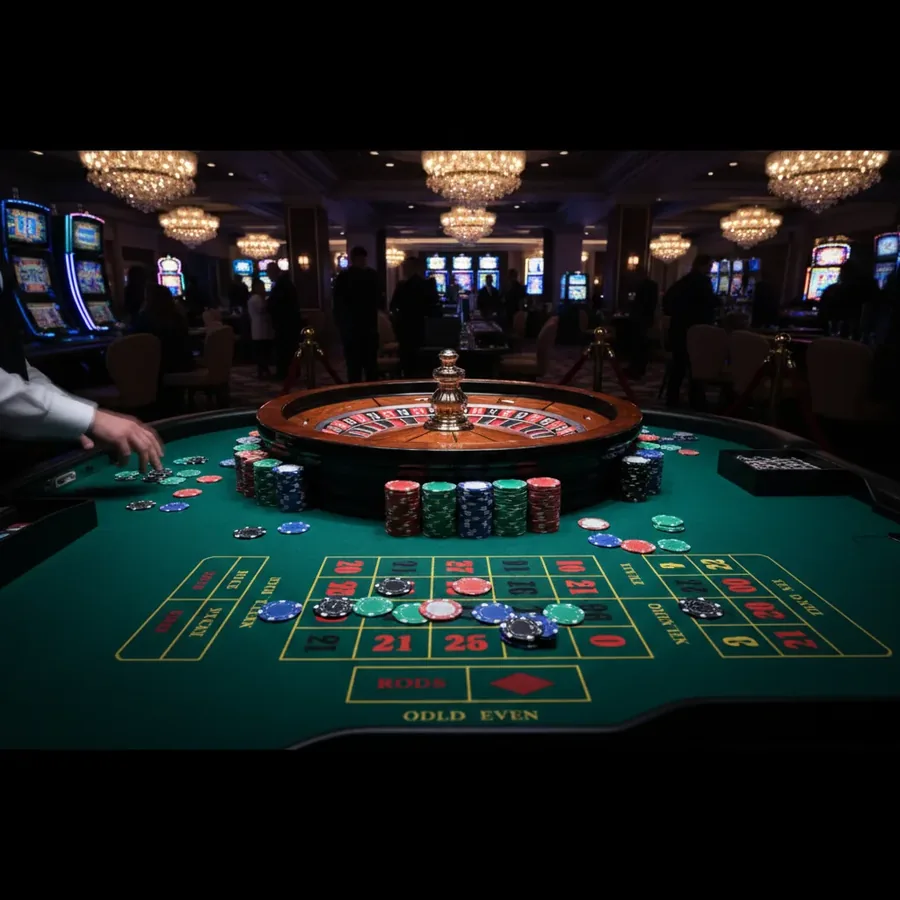
Small Budget: Why Straight 35:1 Empties Quickly
A Straight 35:1 bet requires risking the entire stake on a single number to achieve its high payout potential. On the European wheel with thirty-seven sectors, the probability of hitting this target is approximately 2.70 percent. This low hit frequency means that small budgets deplete rapidly during extended play sessions. The variance associated with this wager is extremely high compared to even-money bets.
The American wheel contains thirty-eight sectors, further reducing the chance of winning a Straight bet. The house edge rises to 5.26 percent, accelerating the erosion of a small bankroll. Even with a minimal stake like 0.10 EUR in Auto Roulette Classic 1 Live, consecutive losses occur frequently. Mathematical expectation dictates that the player will lose money over time due to this inherent disadvantage.
Bonus contributions from table games are limited to ten percent toward the required turnover amount. A 300% welcome bonus up to 2,000 EUR requires significant wagering volume to unlock withdrawals. Relying on high-risk Straight bets makes meeting these requirements difficult for players with limited funds. The combination of high variance and low contribution percentage creates a challenging environment for small budgets.
Statistics: 2.70 Percent of Every Bet
The European roulette variant maintains a constant house edge of 2.70 percent across all possible betting options. This figure represents the theoretical retention rate for every euro wagered on the wheel over the long term. Whether placing a Simple Chance bet or a Corner 8:1 wager, the mathematical expectation remains unchanged. The single zero pocket is the sole source of this statistical advantage for the casino.
French Roulette with La Partage reduces the house edge on even-money bets to just 1.35 percent. This rule refunds half the stake when the ball lands on zero for Red/Black or Odd/Even wagers. However, inner bets like the Straight 35:1 do not benefit from this reduction and retain the 2.70 percent edge. The discrepancy highlights the importance of understanding which rules apply to specific bet types.
Auto Roulette Classic 1 Live operates on a European wheel with thirty-seven sectors and a 2.70 percent house edge. The minimum bet starts at 0.10 EUR, allowing for extensive tracking of statistical outcomes. Over thousands of spins, the actual return will converge toward the 97.30 percent RTP. Deviations from this norm are temporary and driven by short-term variance rather than structural changes.
American Roulette carries a significantly higher house edge of 5.26 percent due to the presence of two zeros. This doubled disadvantage impacts all wagers equally, including those paying 35:1 or 2:1. The Five Number Bet exacerbates this issue with a house edge exceeding seven percent. Players seeking lower statistical losses should avoid the American variant entirely.
How Much to Bet for 10 Percent Contribution?
Table games contribute only ten percent toward fulfilling the wagering requirements for the welcome bonus package. A 300% match bonus up to 2,000 EUR on a 100 EUR deposit yields a 300 EUR bonus. To clear the associated turnover, players must generate substantial betting volume since only a fraction counts. The total turnover requirement depends on the multiplier applied to the combined deposit and bonus amounts.
If the wagering requirement is forty times the bonus, the total turnover needed equals twelve thousand euros. Since roulette contributes ten percent, players must wager one hundred twenty thousand euros to meet this condition. Betting 0.10 EUR per spin in Auto Roulette Classic 1 Live would require one million two hundred thousand spins. This calculation illustrates the impracticality of clearing bonuses through low-stakes table game play.
Live tables such as Lightning Roulette allow bets ranging from 0.20 EUR to 5,000 EUR per round. Higher stakes reduce the total number of rounds needed to satisfy the turnover obligation. However, the risk of losing the bonus funds increases significantly with larger individual wagers. The ten percent contribution rate remains fixed regardless of the bet size or game provider chosen.
Quantum Roulette Live by Playtech shares the same ten percent contribution rule for bonus wagering purposes. The presence of multipliers does not alter the contribution percentage or the underlying house edge calculations. Players must carefully track their progress against the required turnover while managing their bankroll. Failure to meet the full wagering threshold results in the forfeiture of any winnings derived from the bonus.
Latency and Betting Window in Live Stream
Live dealer games introduce latency that affects the timing of bets placed via the digital interface. Authentic Gaming's Auto Roulette Classic 1 Live features an automatic wheel with no human dealer interaction. This setup minimizes delays between the spin initiation and the result announcement. Players have a defined window to place bets before the wheel begins its rotation sequence.
Evolution's Lightning Roulette incorporates a dedicated betting phase followed by the lightning strike animation. The betting window typically lasts several seconds before the multipliers are revealed for each round. Latency may cause slight discrepancies between the client display and the live stream feed. Players must submit their wagers well within this timeframe to ensure they are processed correctly.
Playtech's Quantum Roulette Live follows a similar structure with a distinct betting period for quantum multipliers. The maximum bet limit of 5,000 EUR allows for high-stakes action despite the inherent delays. Network stability plays a crucial role in maintaining synchronization with the live dealer studio. Any disruption during the betting window may result in the rejection of the placed wager.
The payout structure for live roulette remains consistent with standard RNG versions, offering Straight 35:1 and Dozen 2:1 returns. However, the real-time nature of these games adds a layer of complexity regarding bet confirmation. Players should account for potential lag when executing rapid sequences of wagers. Understanding the specific timing mechanics of each provider ensures a smoother gaming experience.
Roulette bet types at a glance
| Bet | Payout | Win Chance | Numbers Covered | House Edge |
|---|---|---|---|---|
| Roulette Französisch mit La Partage (gerade Chancen) | Rot/Schwarz 1:1 (bei 0 Rückerstattung 50%), Odd/Even 1:1, Low/High 1:1; Innere Einsätze ohne La Partage: Straight 35:1, Split 17:1, Street 11:1, Corner 8:1 | 98.65% | Bei 0 wird die Hälfte des Einsatzes auf gerade Chancen zurückerstattet (Rot/Schwarz, Pair/Impair, Manque/Passe). En Prison gibt denselben 1,35%. Regel gilt NUR für gleiche Einsätze | 1.35% |
| Roulette Amerikanisch (doppelte Null, 38 Sektoren) | Straight 35:1, Split 17:1, Street 11:1, Corner 8:1, Six Line 5:1, Dozen 2:1, Column 2:1, Rot/Schwarz 1:1 | 94.74% | 38 Sektoren (1–36 + 0 + 00); Auszahlungen wie beim europäischen Rad, aber der zusätzliche Sektor verdoppelt den Hausvorteil | 5.26% |
| Roulette Französisch, innere Einsätze (La Partage gilt nicht) | Straight 35:1, Split 17:1, Street 11:1, Corner 8:1, Six Line 5:1, Dozen 2:1, Column 2:1 | 97.30% | Rad gleich (37 Sektoren), aber La Partage/En Prison gilt nicht für innere Einsätze – Edge bleibt europäisch | 2.70% |
| Roulette Europäisch (einfache Null, 37 Sektoren) | Straight 35:1, Split 17:1, Street 11:1, Corner 8:1, Six Line 5:1, Dozen 2:1, Column 2:1, Rot/Schwarz 1:1, Odd/Even 1:1, 1-18/19-36 1:1 | 97.30% | 37 Sektoren (1–36 + 0); Auszahlungen wie für 36 Sektoren – daher konstanter Edge auf ALLE Wetten | 2.70% |
| Roulette Amerikanisch – Five Number Bet (0, 00, 1, 2, 3) | Five Number 6:1 (deckt 5 von 38 Sektoren) | 92.11% | Einzige Wette am amerikanischen Rad mit Edge über 5,26% – „Fallenwette“. Kein Äquivalent am europäischen Rad | 7.89% |
What Outside Bets with 1:1 Actually Pay
The Straight bet pays 35 to 1 on the European wheel, which contains 37 sectors including a single zero. This payout structure applies uniformly across all wager types, maintaining a constant house edge of 2.70 percent for every possible bet placed on the table.
In contrast, the American variant features 38 sectors with an additional double zero, yet it retains the identical 35 to 1 payout for a Straight win. The inclusion of this extra pocket doubles the casino advantage to 5.26 percent despite the unchanged reward ratio for successful wagers.
Even Chance bets like Red or Black pay 1 to 1 and cover nearly half the wheel, but the zero pockets ensure the house retains its mathematical advantage. These standard outside wagers offer frequent small wins, though the expected return remains fixed at the theoretical RTP determined by the wheel layout.
A specific exception exists in Lightning Roulette where multipliers up to 500x apply only to single numbers, not to the 1 to 1 outside bets. This distinction ensures that high-volatility bonuses do not alter the fundamental odds of the base game's even-money outcomes.
House Edge: What 2.70 Percent Actually Costs
The European wheel generates a house edge of 2.70 percent, derived from the single zero among 37 total sectors. This figure represents the long-term percentage of all wagered money that the casino expects to retain as profit over millions of spins.
Conversely, the American wheel imposes a significantly higher house edge of 5.26 percent due to the presence of both a zero and a double zero. Players betting on this variant surrender nearly twice the amount to the house compared to those playing the European version with its superior odds.
Tischspiele contribute only 10 percent toward the bonus turnover requirement, making the higher house edge particularly costly for bonus hunters. A 300 percent welcome bonus up to 2,000 euros requires substantial volume, and the slower contribution rate amplifies the impact of the statistical disadvantage.
The Five Number Bet on the American wheel presents an exceptional case with a house edge of 7.89 percent, far exceeding the standard 5.26 percent. This specific wager covering 0, 00, 1, 2, and 3 offers poor value with payouts limited to 6 to 1 despite covering five sectors.
The French variant with La Partage reduces the edge on even chances to 1.35 percent by returning half the stake upon a zero hit. This rule applies exclusively to Red/Black and Odd/Even bets, leaving inner wagers unaffected and retaining the standard 2.70 percent disadvantage.
Wheel Speed and Ball Toss in Real Wheel
Auto Roulette Classic 1 operates as a live dealer game featuring an automatic wheel mechanism managed by Authentic Gaming. The croupier initiates the ball toss while the machine handles the physical rotation, ensuring consistent speed and eliminating human error in the spinning process.
Lightning Roulette by Evolution introduces random multipliers ranging from 50x to 500x on one to five numbers per spin. These digital enhancements overlay the traditional European wheel mechanics, altering the payout potential without changing the underlying physics of the ball toss or wheel rotation.
Quantum Roulette Live utilizes Playtech software to assign quantum multipliers up to 500x to selected numbers before each spin. The visual presentation emphasizes these digital elements, yet the core gameplay relies on the same 37-sector European wheel layout found in standard roulette variants.
The minimum bet limits vary between tables, starting at 0.10 euros for Auto Roulette and Quantum Roulette, while Lightning Roulette begins at 0.20 euros. These thresholds define the accessible entry point for players wishing to experience the automated or multiplier-enhanced wheel dynamics.
Distribute 500 Euro Bankroll at the Lightning Table
The Lightning Roulette table accepts bets ranging from 0.20 to 5,000 euros, allowing precise allocation of a 500 euro bankroll. This wide betting range accommodates various staking strategies, enabling players to place multiple low-value wagers or concentrate funds on high-potential single number bets.
The maximum payout cap stands at 5,000 euros regardless of the applied multipliers, limiting the potential windfall from lucky hits. Even if a straight bet wins with a 500x multiplier, the actual credit is capped at this ceiling, preventing exponential growth beyond the stated limit.
Tischspiele contribute only 10 percent to the wagering requirements for the 300 percent welcome bonus up to 2,000 euros. Distributing a 500 euro bankroll requires generating 4,000 euros in turnover to clear the bonus, a task complicated by the 5.26 percent house edge inherent in the American-style odds often associated with such promotions.
The game uses a European wheel with 37 sectors, maintaining a base house edge of 2.70 percent on non-multiplied bets. This standard edge applies to all outside wagers, ensuring that the majority of the bankroll depletion occurs through these lower-risk, lower-reward activities during the session.
French with La Partage vs European
The French roulette variant with La Partage offers a reduced house edge of 1.35 percent on even chance bets. This benefit applies specifically to Red/Black, Odd/Even, and Low/High wagers, where half the stake is returned if the ball lands on zero.
In contrast, the standard European wheel maintains a 2.70 percent house edge across all bets, including even chances. Without the La Partage rule, a zero result causes the entire stake to be lost, doubling the cost of failure compared to the French variant for these specific wagers.
The French variant also lacks La Partage protection for inner bets like Straights and Splits, keeping their edge at 2.70 percent. This discrepancy means players focusing on inside numbers gain no advantage from the French label, effectively playing under European rules for those specific wagers.
The Straight bet pays 35 to 1 in both variants, but the frequency of zero hits impacts the overall profitability differently. Players utilizing a 500 euro bankroll will preserve more capital in French roulette due to the partial refunds on even chance losses, extending playtime against the house edge.
Table Limit 500 Euro Stops Every Doubling
The Auto Roulette Classic 1 Live table enforces a maximum payout cap of 35:1 on Straight bets, which translates to a hard limit of 70,000 EUR for a 2,000 EUR wager. This constraint effectively neutralizes the Martingale strategy, as players cannot double their stake indefinitely to recover previous losses after a losing streak. The fixed ceiling ensures that the casino's exposure remains bounded regardless of how aggressively a user increases their bet size on consecutive spins.
Lightning Roulette operates with a higher maximum bet limit of 5,000 EUR, yet the base payout structure remains identical to standard European roulette at 35:1 for single numbers. Players attempting to use doubling systems here face the same mathematical barrier, as the table limits prevent the exponential growth required to overcome the house edge. The presence of multipliers up to 500x offers occasional high payouts but does not alter the fundamental limitation imposed by the maximum wager on the base game.
The Quantum Roulette Live variant also permits wagers up to 5,000 EUR, maintaining the same structural restriction on maximum payouts for standard inside bets. When a player places a maximum bet of 5,000 EUR on a single number, the potential return is capped at 175,000 EUR before any quantum multipliers are applied. This rigid boundary stops any progression betting system from generating infinite returns, ensuring the mathematical advantage of the house remains intact over time.
2.70 vs 5.26 Percent House Edge
European Roulette features a single zero on its 37-sector wheel, resulting in a consistent house edge of 2.70% across all bet types including Straight and Dozen wagers. This statistical advantage means that for every 100 EUR wagered, the theoretical return to player stands at 97.30%, preserving more capital for extended mobile play sessions. The absence of a double zero eliminates the additional probability mass that typically inflates costs in other roulette variants found in online casinos.
American Roulette introduces a second zero, expanding the wheel to 38 sectors and doubling the house edge to 5.26% for standard bets like Red/Black or Split. This increased margin significantly accelerates bankroll depletion compared to the European version, as the expected loss per spin rises substantially due to the extra losing outcome. Mobile players should note that this higher cost applies uniformly to all outside and inside bets except for the specific Five Number Bet.
The Five Number Bet on the American wheel covers sectors 0, 00, 1, 2, and 3, offering a unique but mathematically inferior payout structure with an RTP of 92.11%. This specific wager carries a devastating house edge of 7.89%, making it the most expensive option available on the American layout despite covering five numbers. Choosing between European and American variants directly impacts long-term viability, with the European edge being less than half that of the American standard.
Why the Ball Has No Memory
Roulette outcomes are independent events, meaning the result of one spin has no causal influence on the probability distribution of the next spin on any live table. Whether the ball lands on Black ten times consecutively, the probability of landing on Red remains exactly 18/37 on a European wheel with one zero. This statistical independence invalidates common misconceptions about hot or cold streaks driving future results in games like Auto Roulette Classic 1 Live.
The French Roulette variant with La Partage rule modifies the payout for even-money bets when zero appears, refunding 50% of the stake rather than losing it entirely. This rule reduces the house edge on Red/Black, Odd/Even, and Low/High bets to 1.35%, providing a slightly better expected value than standard European roulette. However, this benefit applies exclusively to these specific outside bets and does not extend to inner combinations like Corners or Streets.
Inside bets such as Straight, Split, Street, and Corner wagers remain unaffected by the La Partage rule, retaining the standard 2.70% house edge on the European wheel. A Straight bet still pays 35:1 while carrying the full statistical disadvantage inherent to the single zero layout. Players focusing on mobile play must recognize that no sequence of previous spins alters the fixed probabilities governing each individual outcome.
Betting Window Missed: What Happens to the Ball
In Lightning Roulette, Evolution provides a dynamic betting window where players can place wagers before the multiplier generation phase begins. Once the round commences and the ball is released, all betting options close immediately, preventing any late entries or adjustments to the active chips on the virtual table. This strict timing ensures that the game flow remains uninterrupted and fair for all participants connected via mobile devices.
Quantum Roulette by Playtech follows a similar protocol where the betting phase concludes before the quantum randomizer selects multipliers for up to five numbers. If a player fails to place a chip within the allotted time, they forfeit the opportunity to win enhanced payouts associated with those specific quantum multipliers. The base game continues normally, but the potential for amplified wins is lost if the initial wagering period is missed.
Auto Roulette Classic 1 Live utilizes an automated wheel that spins continuously, requiring players to adhere strictly to the designated betting intervals shown on the screen. Missing the window results in the bet being rejected, as the system locks the interface once the croupier announces 'no more bets'. This mechanical process removes human variability from the spin initiation, ensuring precise timing for all registered wagers.
House Edge 2.70 Percent in One Number
A Straight bet on a single number in European Roulette pays 35:1, reflecting the true odds of 36:1 against winning on a 37-sector wheel. The difference between the true odds and the paid odds creates the 2.70% house edge, which represents the casino's theoretical profit margin on every unit wagered. This fixed relationship holds true regardless of the bet amount, from the minimum 0.10 EUR stake to the maximum allowable limit.
The payout structure for Split bets remains constant at 17:1, maintaining the same proportional disadvantage for the player as the Straight bet on the European layout. Similarly, Street bets pay 11:1 and Corner bets pay 8:1, all operating under the identical 2.70% house edge derived from the single zero configuration. These consistent ratios ensure that the mathematical expectation remains uniform across all inside bet categories on the table.
Outside bets such as Dozen and Column wagers offer a 2:1 payout, covering 12 numbers each while still suffering from the 2.70% house edge due to the presence of zero. Even-money bets like Red/Black pay 1:1 but are subject to the same underlying statistical reality unless modified by special rules like La Partage. Understanding these fixed payouts clarifies why no betting strategy can overcome the built-in mathematical advantage inherent in the game design.
Contact
Live - online chat
Banking









Providers












Luckywave Casino 2026